

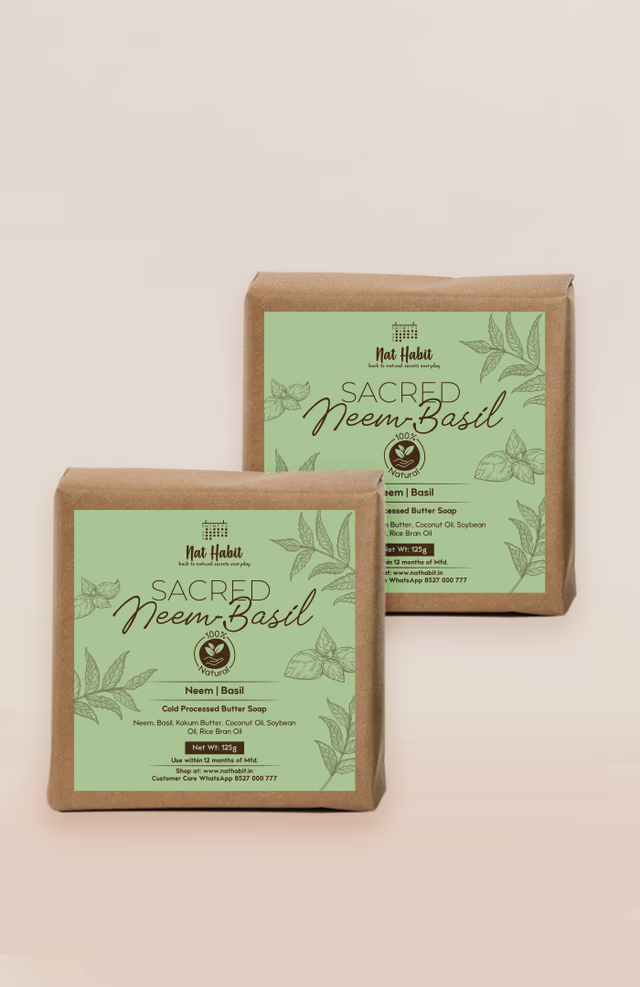
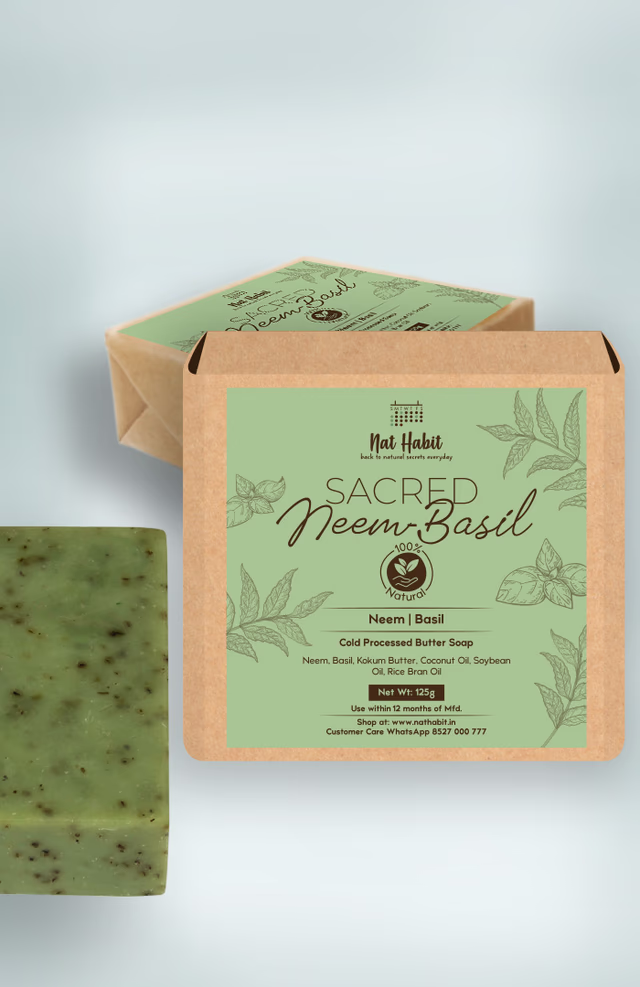
Cold Processed Sacred Neem-Basil Soap
Key Benefits
- Protects skin's natural oils. Non-drying soft cleansing.
- Light exfoliation of dead cells & toxins.
- Fights free radicals protecting skin from aging.
- Clears skin of spots, blemishes, pigmentation & sun tan.
Benefits & Storage
Key Benefits
- Protects skin's natural oils. Non-drying soft cleansing.
- Light exfoliation of dead cells & toxins.
- Fights free radicals protecting skin from aging.
- Clears skin of spots, blemishes, pigmentation & sun tan.
Storage & Expiry
Expiry
Use within 12 months of Mfg. Date.
Storage
Store in cool dry place, away from direct sunlight.
Net Weight
125 g
No reviews yet. Be the first to review this product.
Write a Review
Ask a Question
Login to ask a question.
1. Sustainable Sourcing of Ingredients
Neem Oil:- Biodegradability: Neem oil is derived from the seeds of the neem tree (Azadirachta indica), which is known for its rapid growth and minimal water requirements. Neem trees can thrive in poor soil conditions, making them highly sustainable. Neem oil is biodegradable and non-toxic to humans, animals, and beneficial insects .
- Pest Resistance: The neem tree is naturally pest-resistant, reducing the need for chemical pesticides and fertilizers during cultivation. This characteristic minimizes environmental pollution and maintains soil health .
- Renewable Resource: Basil (Ocimum basilicum) is a fast-growing herb that can be cultivated year-round. It is a renewable resource with a short growth cycle, making it an environmentally friendly ingredient .
- Low Water Usage: Basil cultivation typically requires less water compared to other crops, which helps conserve water resources .
2. Eco-friendly Production Processes
- Cold Process Method: If the soap is produced using the cold process method, it generally requires less energy compared to hot process soap-making. This method involves mixing oils and lye at room temperature, reducing energy consumption .
- Local Sourcing: If the ingredients are locally sourced, it reduces transportation emissions. Shorter supply chains lead to a smaller carbon footprint due to decreased fuel usage .
3. Packaging
- Minimal and Recyclable Packaging: Sustainable soaps often use minimal packaging, and any packaging used is typically biodegradable or recyclable. This reduces waste and the carbon footprint associated with production and disposal .
4. Environmental Impact and Carbon Footprint
- Reduced Emissions: The use of natural, plant-based ingredients like neem and basil means fewer emissions during production compared to synthetic chemicals .
- Carbon Sequestration: Neem trees and basil plants contribute to carbon sequestration during their growth, helping to offset carbon emissions. Plants absorb CO2 from the atmosphere, which is a natural way to reduce overall carbon footprint .
Conclusion
The sustainability of Neem-Basil Soap is attributed to the eco-friendly sourcing of neem and basil, energy-efficient production methods, and minimal packaging. The combined effect of these factors contributes to a reduced carbon footprint, making it a more sustainable choice for consumers.Step 1: Raw Material Production
Neem Oil
- Emission Factor: Approximately 1.5 kg CO2e per kg of neem oil produced.
- Quantity Used: 0.1 kg per soap bar.
Basil Oil
- Emission Factor: Approximately 1.0 kg CO2e per kg of basil oil produced.
- Quantity Used: 0.05 kg per soap bar.
Step 2: Manufacturing
- Emission Factor: Assume 0.3 kg CO2e per soap bar for energy and other inputs during manufacturing.
Step 3: Packaging
- Emission Factor: Assume 0.1 kg CO2e per soap bar for biodegradable/recyclable packaging.
Step 4: Transportation
- Local Sourcing: If ingredients are locally sourced, emissions are lower. Assume 0.2 kg CO2e per soap bar for transportation.
Step 5: Total Carbon Footprint
Adding all the components together: Total Emissions=Neem Oil Emissions+Basil Oil Emissions+Manufacturing Emissions+Packaging Emissions+Transportation Emissions\text{Total Emissions} = \text{Neem Oil Emissions} + \text{Basil Oil Emissions} + \text{Manufacturing Emissions} + \text{Packaging Emissions} + \text{Transportation Emissions} Total Emissions=0.15 kg CO2e+0.05 kg CO2e+0.3 kg CO2e+0.1 kg CO2e+0.2 kg CO2e=0.8 kg CO2e per soap bar\text{Total Emissions} = 0.15 \, \text{kg CO2e} + 0.05 \, \text{kg CO2e} + 0.3 \, \text{kg CO2e} + 0.1 \, \text{kg CO2e} + 0.2 \, \text{kg CO2e} = 0.8 \, \text{kg CO2e per soap bar}References
- Neem oil biodegradability and benefits
- Environmental benefits of neem
- Natural pest resistance of neem
- Basil cultivation and sustainability
- Cold process soap making energy efficiency
- Local sourcing and carbon footprint
- Sustainable packaging in cosmetics
- Environmental impact of natural vs. synthetic products
- Carbon sequestration by plants
- Role of neem and basil in carbon sequestration
Offers
No offers available for this product at the moment.
Contact the vendor for bulk order pricing: nathabit
Please contact the vendor directly for their specific return and shipping policies.
For any inquiries, contact us at info@cleantech-mart.com
Request a Quote
Request date: April 22, 2026
Status: New Quote Request – You will get a quote soon!
Cold Processed Sacred Neem-Basil Soap
Send a request
Product Enquiry
Cold Processed Sacred Neem-Basil Soap
Chat with us!
Cold Processed Sacred Neem-Basil Soap
Shopping Cart
Shipping Address :
Guest
No shipping address found. Please add an address.
—
Cold Processed Sacred Neem-Basil Soap
Price: ₹199.00 per pieces ₹308.00
Estimated Total Amount: ₹199.00